
 Assessment science
Item exposure is the quiet failure of a small question bank
A bank that is too small stops measuring knowledge and starts measuring who has seen the questions. The arithmetic is unforgiving and easy to check.
2 min read
Assessment software
We design, build and run the systems that author, deliver and score assessments — and we stay on for the exam windows, which is where most of the difficulty actually is.








What we build
Rarely one on its own. Each of these usually arrives attached to at least one of the others.
Item banking, authoring, delivery and scoring as one system rather than four that synchronise overnight.
Session controls, evidence capture and audit trails built to survive an appeal, not just to deter.
LTI, SSO and roster sync into the systems an institution already runs, so assessment is not another island.
Draft generation and item review with a human approving every item that reaches a candidate.
Item statistics and cohort reporting that tell you whether a question measured anything.
Running the platform through exam windows, including the fortnight either side when it matters most.
Why it is different
Three things that follow from treating it that way.
Scoring rules, item lifecycles and integrity requirements are the hard parts, and they are the parts a general-purpose build gets wrong last and most expensively.
Load is not uniform. A platform that is fine in March and falls over in May has not been tested against the only week that counts.
Every consequential action is recorded in a form a regulator or an appeals panel can read, because reconstructing it afterwards is not possible.
What we run ourselves
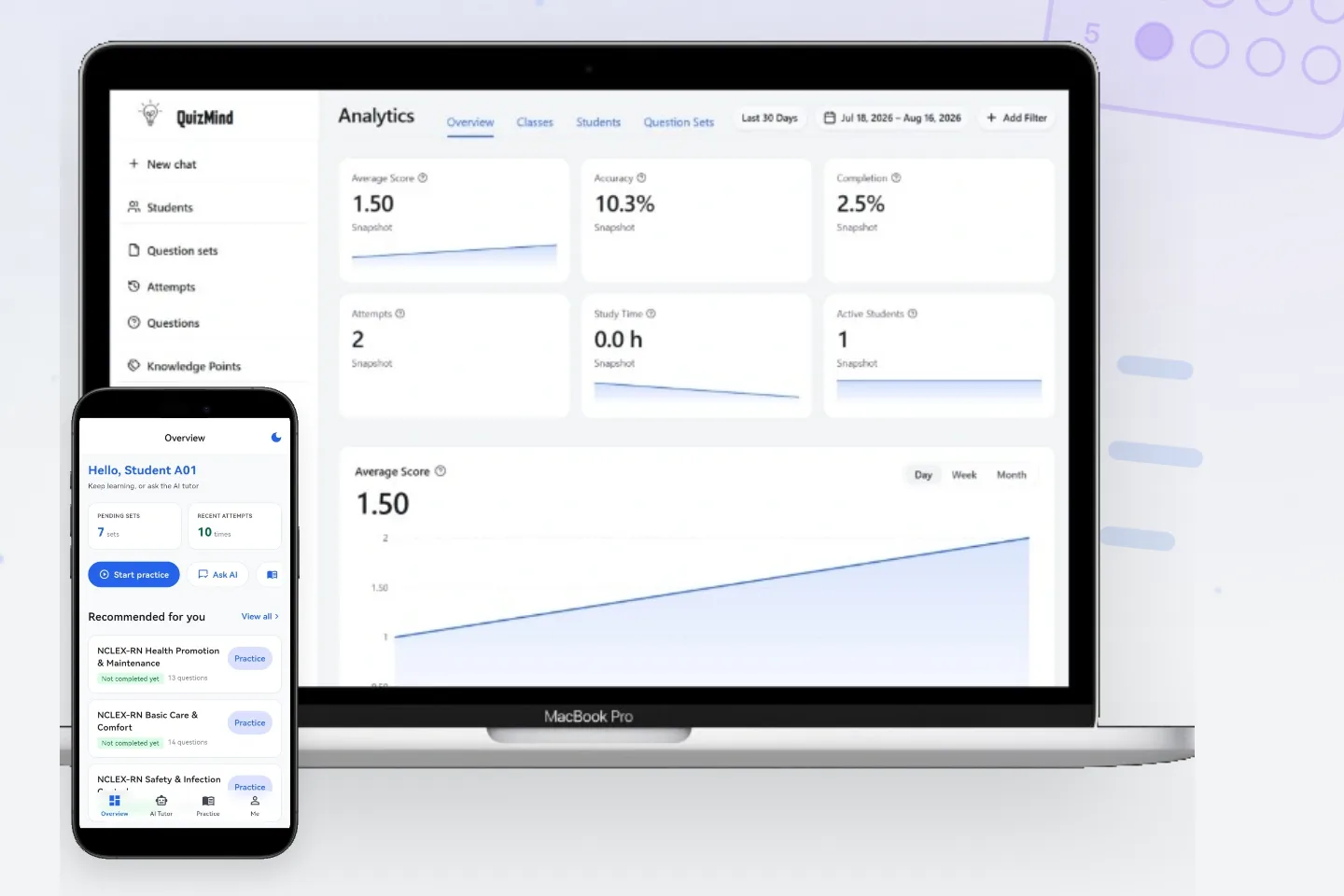
Quizlyne is exam practice software for licensing and certification schools — real estate, CDL, insurance, cosmetology, the trades. Schools upload the question bank they already own and their learners drill it on web and mobile, branded as the school rather than as us.
We built it on the same platform we build client systems on, and we run it. The authoring, the delivery, the mobile practice and the cohort reporting are things we maintain on a Monday morning rather than things we have read about — which is the only version of that claim you can go and verify.
The commitments that shape everything below them.
The people who answer technical questions are the ones who wrote the code. There is no account layer in between.
If a candidate cannot operate the interface, the score measures the interface. We treat that as a measurement defect.
Residency and retention are design inputs, decided before the first table is created rather than retrofitted.
Your items, results and audit records are exportable in documented formats. Leaving should be possible.
Scoping
Tell us what you need to deliver and to whom. We will come back with a shape, a rough duration and the parts we think are riskiest — including the ones that argue against starting.
Assessment scienceA bank that is too small stops measuring knowledge and starts measuring who has seen the questions. The arithmetic is unforgiving and easy to check.
 Security and compliance
Proctoring produces evidence about a room, not a verdict about a person. Treating its output as a decision is where institutions get into trouble.
 Engineering
Static hosting removes a class of outage from the pages candidates see first, and costs less than the runtime it replaces.
A short description is enough to start. If it is not something we should build, we will say so.